
GHENT
Belgium
Ghent has canals, churches, bikes, local shops, old buildings, and enough chocolate to destroy a reasonable snack schedule.
QUICK LINKS / TL;DR
The useful details first.
Itinerary: 3 days: Ghent → Bruges → Brussels
Where we stayed: We stayed directly on the canal in Ghent's historic center: Ghent Marriott Hotel
What we packed: Useful for cobblestones and changeable Belgian weather: Compact umbrella · Universal plug adapter · Long puffer coat · Tech-touch gloves
What we ate: Ghent stops saved from our trip: Chocolaterie Luc Van Hoorebeke · Het Pateeke · Chocolaterie De Burg · Galet
Book ahead: Book only the fixed-entry pieces; leave the streets flexible: Gravensteen Castle · Ghent Altarpiece · Belfry of Bruges · Atomium
Packing links are Amazon affiliate links; we may earn a commission at no extra cost to you. Affiliate Disclosure
OUR TRIP, BY PLACE
Choose a stop from our route.
Open a location for the part of the trip we remember, the practical details that mattered, and the changes we would make next time.
2 SEASONS - IDEAL STAY: 1-2 DAYS
Ghent feels historic without feeling staged.
We have seen Ghent in winter and spring, and the city worked in two different ways. Winter gave us cold evening walks, lights reflected in the canals, and frequent reasons to step into a cafe or chocolate shop. Spring gave us longer days, more time outside, and a slower look at the same streets.
Ghent feels historic without feeling arranged only for visitors. People commute by bike, shop, meet friends, and go about normal days under buildings we kept stopping to photograph. That lived-in quality is a large part of why we preferred it to a city that exists mainly for day-trip crowds.
We stayed at the Ghent Marriott on the canal. The location made the view part of the hotel and kept the historic center available after visitors left for Bruges, Brussels, or the train home.
How we would spend the time
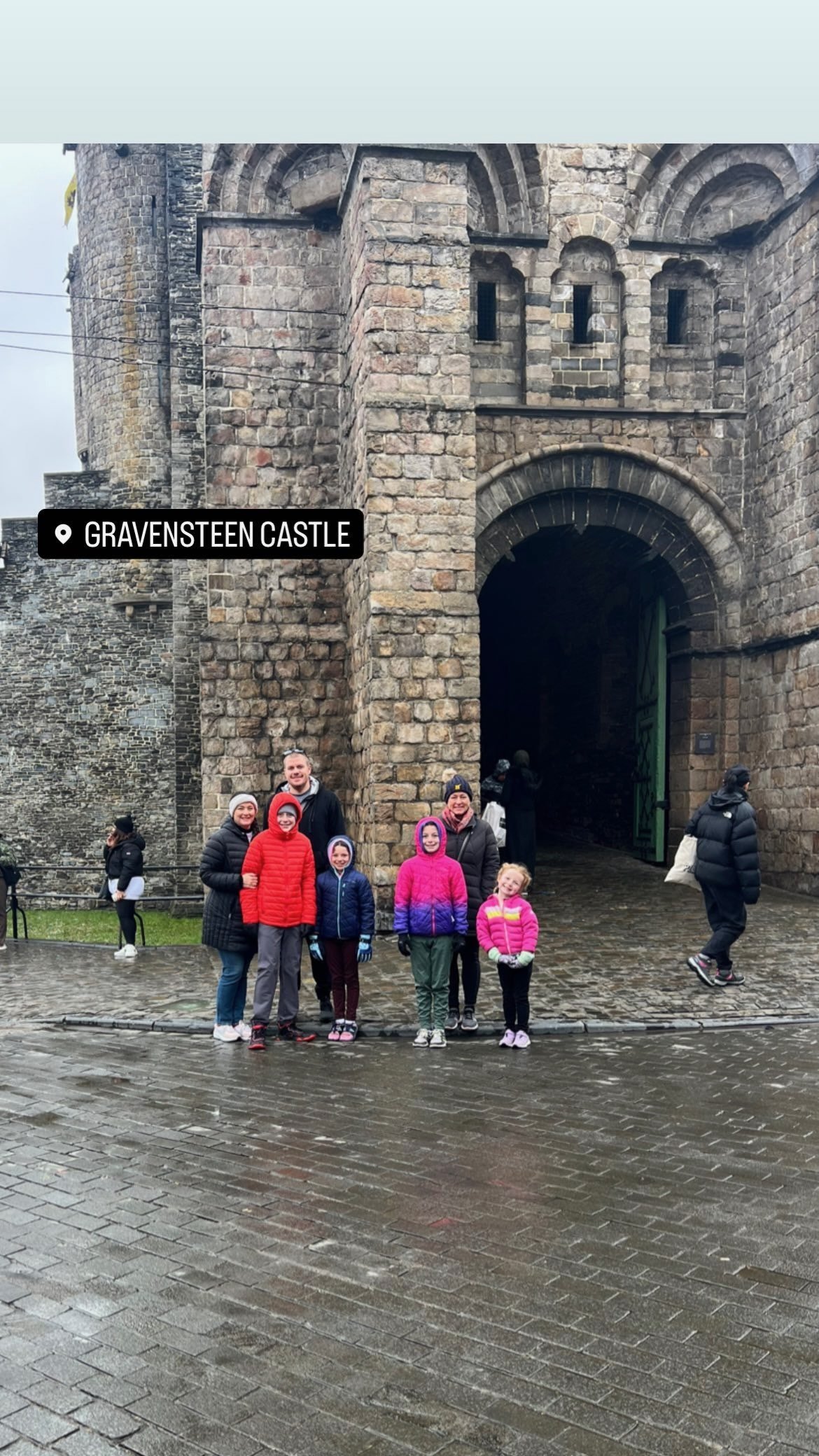
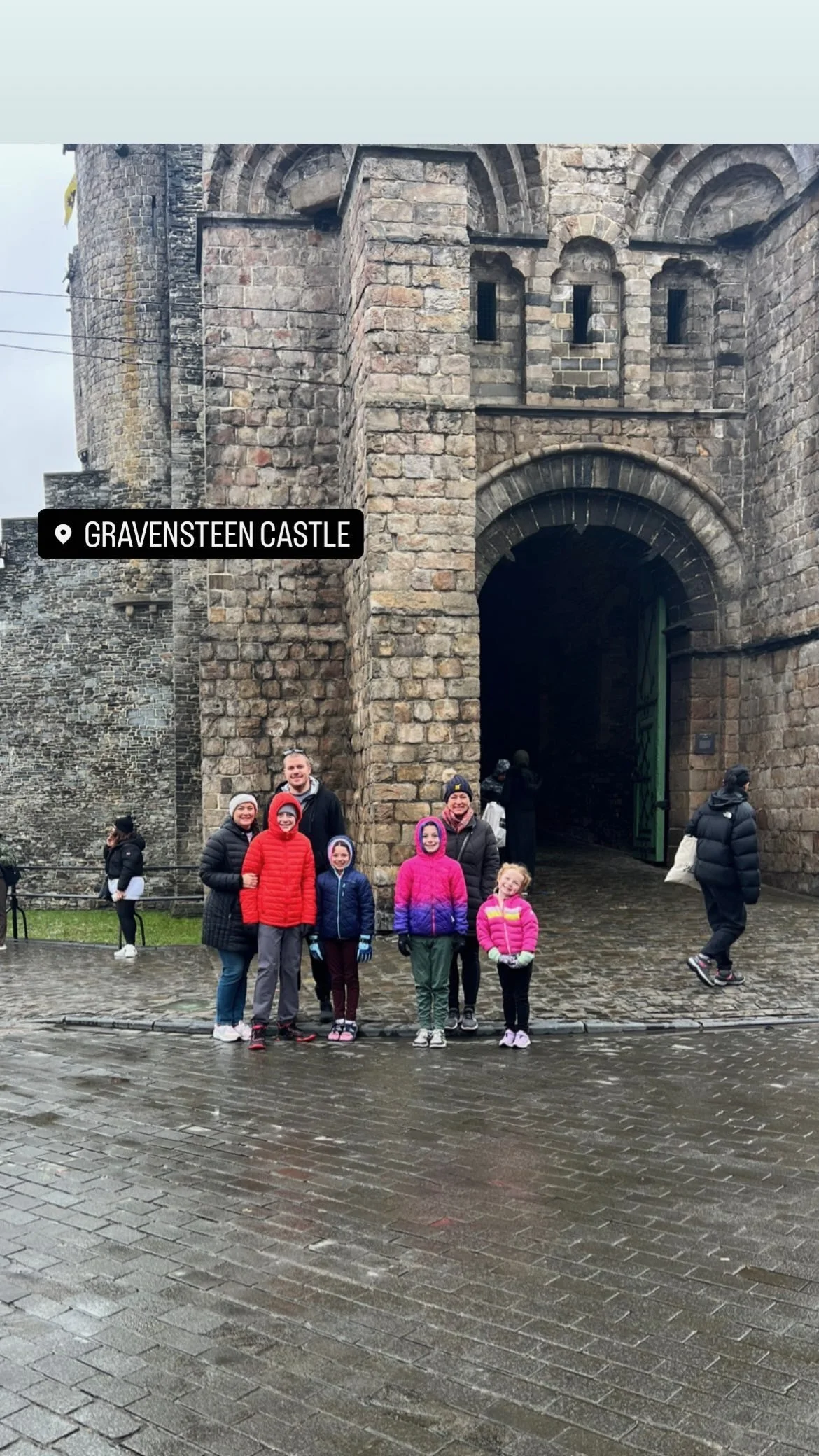
One full Ghent day can cover Graslei and Korenlei, St. Bavo's Cathedral, Gravensteen Castle, a canal cruise, and plenty of walking. Two days is better when churches and museums matter, because a museum, a long lunch, local shops, and chocolate already make a complete day.
The three-day Belgium itinerary uses Ghent as a fixed base for Bruges and Brussels. That is different from saying Ghent itself requires three sightseeing days. The train connections let us keep one room and return to a city we already understood each evening.
Chocolaterie Luc Van Hoorebeke is still our favorite. We would check the shop's hours before saving it for late afternoon, buy something small to eat immediately, and be more realistic about how much of the gift box will survive the trip home.
The practical obstacle is not distance; it is the street surface and traffic pattern. Cobblestones slow luggage, and bike lanes are active transportation. We look before stepping into them and do not stop in one to study the map, no matter how good the canal view is.
What worked here
A canal-side base: The hotel location extended the day and made the evening center feel like part of the stay.
One room for three cities: Ghent kept Bruges and Brussels simple without another luggage move.
Local businesses: Open churches, independent shops, and one favorite chocolatier gave the city its own identity.
Plan around this
Give Ghent one full day: Add a second when museums, churches, and slow meals are priorities.
Watch the bike lanes: The cyclists know where they are going, even when visitors do not.
Price the exact dates: Lodging and restaurants felt more expensive than some of our French stops, especially in a central location.
Our take: Ghent is worth one or two days and works especially well as a Belgium base. We would return in either season for the canals, everyday rhythm, churches, and another box from Luc Van Hoorebeke.
EASY DAY TRIP FROM GHENT
Bruges gave us the storybook Belgium day.
We took the train from Ghent and started around Markt Square and the Belfry. The historic center is compact enough that we did not need to choreograph every hour.
We walked through Burg Square, followed the canals, stopped for fries, waffles, and chocolate, and let the streets make the day. A canal boat gave the family a useful break from cobblestones without taking us out of the city.
What worked
Ghent as the fixed hotel base
A simple train day with no luggage
Leaving time for food and canal views
What we would change
We would arrive earlier if climbing the Belfry is a priority and avoid treating every chocolate shop as interchangeable. Bruges is easy to see quickly and better when we do not.
Our take: Bruges was beautiful and worth the day trip. Returning to Ghent in the evening kept the route calmer.
FINAL-DAY CITY STOP
Brussels gave the route its grand-city finish.
We began at Grand Place, where the scale and detail make the square feel less like a quick photo stop than it appears on an itinerary.
From there we walked to Manneken Pis, browsed the Galeries Royales Saint-Hubert, and kept chocolate within reach. The Comic Strip Center and Atomium are useful choices for families, but they pull the day in different directions, so we would choose based on the children rather than force both.
What worked
Direct trains from Ghent
Grand Place as the anchor
One optional family attraction rather than a long list
What we would change
We would decide before arrival whether the Atomium is truly part of the day. It is not a small add-on to the historic center.
Our take: Brussels was a worthwhile final day, but Ghent remained the place we were happiest to return to.
WHAT WORKED
We would keep these parts.
One fixed base: Ghent kept the three-city Belgium route from becoming three hotel moves.
Short train days: Bruges and Brussels could be explored without carrying luggage through either city.
Evenings in Ghent: Returning after the daytime crowds made the canal location more valuable.
A complete Ghent day: One museum or castle, a long walk, food, churches, and chocolate was enough.
WHAT WE WOULD CHANGE
A better version of the same trip.
Separate base nights from sightseeing days: A three-night stay does not mean Ghent itself needs a three-day checklist.
Check seasonal dates: Winter atmosphere is reliable; a specific market schedule is not.
Price the canal location: We would pay more for it only when the evening access and room setup earn the difference.
Protect a second day when needed: Churches and museums deserve time rather than becoming filler before a train.