
MONUMENTS - MUSEUMS - MOUNT VERNON - GETTYSBURG
Washington DC
Our fall-break trip mixed the big national landmarks with museums, family history, and a few nighttime views that were worth saving our energy for.
QUICK LINKS / TL;DR
The useful details first.
Itinerary: 6 days: National Mall → Smithsonian museums → Mount Vernon → Gettysburg
Where we stayed: Our exact hotel is not in the archive; compare a Metro-friendly city base: Washington, DC stays
What we packed: Useful for long Mall and museum days: External charger · Compact umbrella · Travel first-aid kit · Packing cubes
What we ate: We ate at the first two; the others are DC classics to consider: Pitango Gelato · Founding Farmers · Old Ebbitt Grill · Ben's Chili Bowl
Book ahead: Request restricted access first, then timed tickets: White House visit · US Capitol tour · Washington Monument · Mount Vernon · Gettysburg licensed guides
Packing links are Amazon affiliate links; we may earn a commission at no extra cost to you. Affiliate Disclosure
OUR TRIP, BY PLACE
Choose a stop from our route.
Open a location for the part of the trip we remember, the practical details that mattered, and the changes we would make next time.
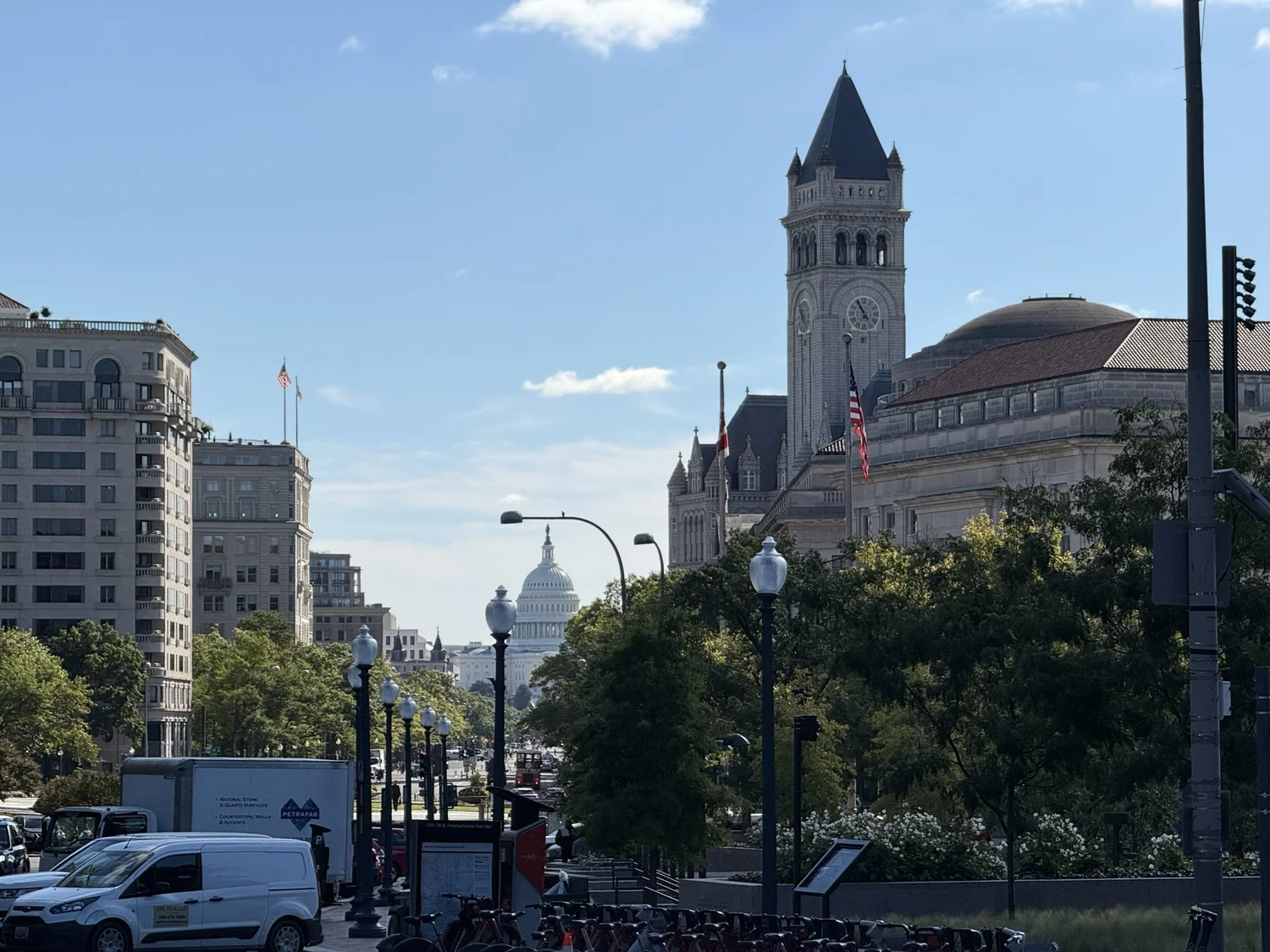
MONUMENTS · LONG WALKING DAY
The Mall is much larger than it looks.
We grouped monuments instead of zigzagging across Washington. The Washington Monument, World War II Memorial, Lincoln Memorial, White House, and reflecting pool can form a route, but the distance still adds up.
Our trip included a White House tour and a trip up the Washington Monument. Those were the reservations that gave the day its structure; the memorials filled the route around them.
We would treat the Mall as a full outdoor day and not assume a major museum is a quick indoor add-on afterward.
Our take: The monuments were worth the walking, but the day became better when we respected the distance.
CHOOSE, DO NOT COLLECT
The Smithsonian works best when the family chooses.
Free admission can create the false idea that every museum should fit. We had better days when we chose the collection the children actually wanted and let it hold the time it deserved.
Air and Space, Natural History, American History, and the National Gallery can each be the main event. Free does not mean small.
What worked
One major museum at a time
Checking timed-entry requirements
Using museum cafés or nearby food to protect the day
What we would change
We would stop treating free museums as backup plans. A good Smithsonian visit needs the same energy margin as a paid attraction.
Our take: The museums made DC unusually good for a family, especially when everyone had a voice in the choice.
FULL-DAY HISTORY STOP
Mount Vernon gave us history in a physical place.
We toured the mansion, gardens, working farm, blacksmith shop, Washington's tomb, and the Museum and Education Center. The Potomac overlook and working areas made the visit larger than a mansion tour.
The site worked for our family because it showed George Washington as a husband, farmer, inventor, military leader, and president instead of only a name in a textbook.
We would arrive earlier and plan lunch before the busiest window instead of treating the estate as a half-day extension of central DC.
Our take: Mount Vernon was worth leaving the city and deserved its own day.
DAY TRIP · CONTEXT MATTERS
Gettysburg needed context, not only a drive.
The battlefield is broad, quiet, and difficult to understand from isolated monuments. We began with the Visitor Center and Cyclorama, then followed the landscape through places such as Cemetery Ridge, Little Round Top, Devil's Den, Pickett's Charge, and Soldiers' National Cemetery.
A licensed battlefield guide or a well-planned auto tour can connect those places into a story. We would choose one before the trip instead of assuming the monuments will explain themselves.
This was not a casual add-on. The drive, visitor center, battlefield, and emotional weight made it a full day.
Our take: Gettysburg was one of the most meaningful history days of the route.
GOVERNMENT AND FOUNDING DOCUMENTS
Capitol Hill made the institutions feel real.
We grouped the U.S. Capitol, Library of Congress, and Supreme Court instead of crossing the city between unrelated reservations. Security and timed access make this a day that benefits from a simple route.
We added the National Archives because seeing the Constitution mattered to us. That document belonged with the government buildings and gave the family a direct connection between the ideas and the places where they are carried out.
Next time, we would avoid placing two security-heavy reservations back to back and would request restricted tours as soon as the dates open.
Our take: The day worked because it had one subject: how the country is governed and the documents behind it.
FINAL FULL DAY
Arlington asked us to slow down.
The cemetery, Tomb of the Unknown Soldier, and changing of the guard gave the final Washington day a quieter focus.
We did not treat it as another monument checklist. The walk, silence, and scale did more than a rushed summary could.
What worked
Comfortable shoes
Time around the guard change
A lighter second half of the day
What we would change
We would check current security and entry information before leaving and avoid scheduling the airport or a major evening event too close behind the visit.
Our take: Arlington was a fitting, reflective end to a history-heavy family trip.
WHAT WORKED
We would keep these parts.
Early requests: Restricted tours and timed entries were handled before the trip.
Geographic grouping: Mall monuments and nearby museums stayed on the same day.
Energy for the evening: Saving some walking capacity made the memorials after dark worthwhile.
Dedicated history days: Mount Vernon and Gettysburg each had enough time to make sense.
WHAT WE WOULD CHANGE
A better version of the same trip.
Separate security lines: Two high-friction reservations should not sit back to back.
Limit museum priorities: One or two meaningful museums beats skimming four.
Keep a weather backup: A flexible indoor option protects the day without overbooking it.