
NEW YORK - COASTAL NEW ENGLAND - BOSTON
Boston
Flying through New York turned the drive to Boston into part of the vacation, with coastal stops on both sides of four walkable days in the city.
QUICK LINKS / TL;DR
The useful details first.
Itinerary: 6 days: New York → coastal New England → Boston → New York
Where we stayed: Our exact hotel is not in the archive; compare a downtown base and park the car: Boston stays
What we packed: Useful for the road trip and four walking days: Compact umbrella · External charger · Packing cubes · Long puffer coat
What we ate: We ate at Boston Chowda; the others are local classics to consider: Boston Chowda Co. · Union Oyster House · Regina Pizzeria · Modern Pastry
Book ahead: Reserve the fixed-time experiences and leave the trail flexible: Boston Tea Party Ships and Museum · New England Aquarium · Freedom Trail tours · Harvard tours
Packing links are Amazon affiliate links; we may earn a commission at no extra cost to you. Affiliate Disclosure
OUR TRIP, BY PLACE
Choose a stop from our route.
Open a location for the part of the trip we remember, the practical details that mattered, and the changes we would make next time.
NEW YORK TO BOSTON ROAD TRIP
The drive north became part of the vacation.
We flew into New York, rented a car, and left room for the coast to break up the route to Boston. The exact stop mattered less than not treating the drive as lost time.
Mystic and Newport are useful possibilities, not a list of places we are claiming to have completed. Our rule would be to choose one dependable stop, then let a small town, seafood lunch, or viewpoint earn the remaining time if the family is ready for it.
On the return drive, we would protect the same flexibility instead of trying to collect every saved pin.
Our take: Flying through New York saved money and gave the route room to become more than an airport transfer.
BEST FIRST-TIME BOSTON DAY
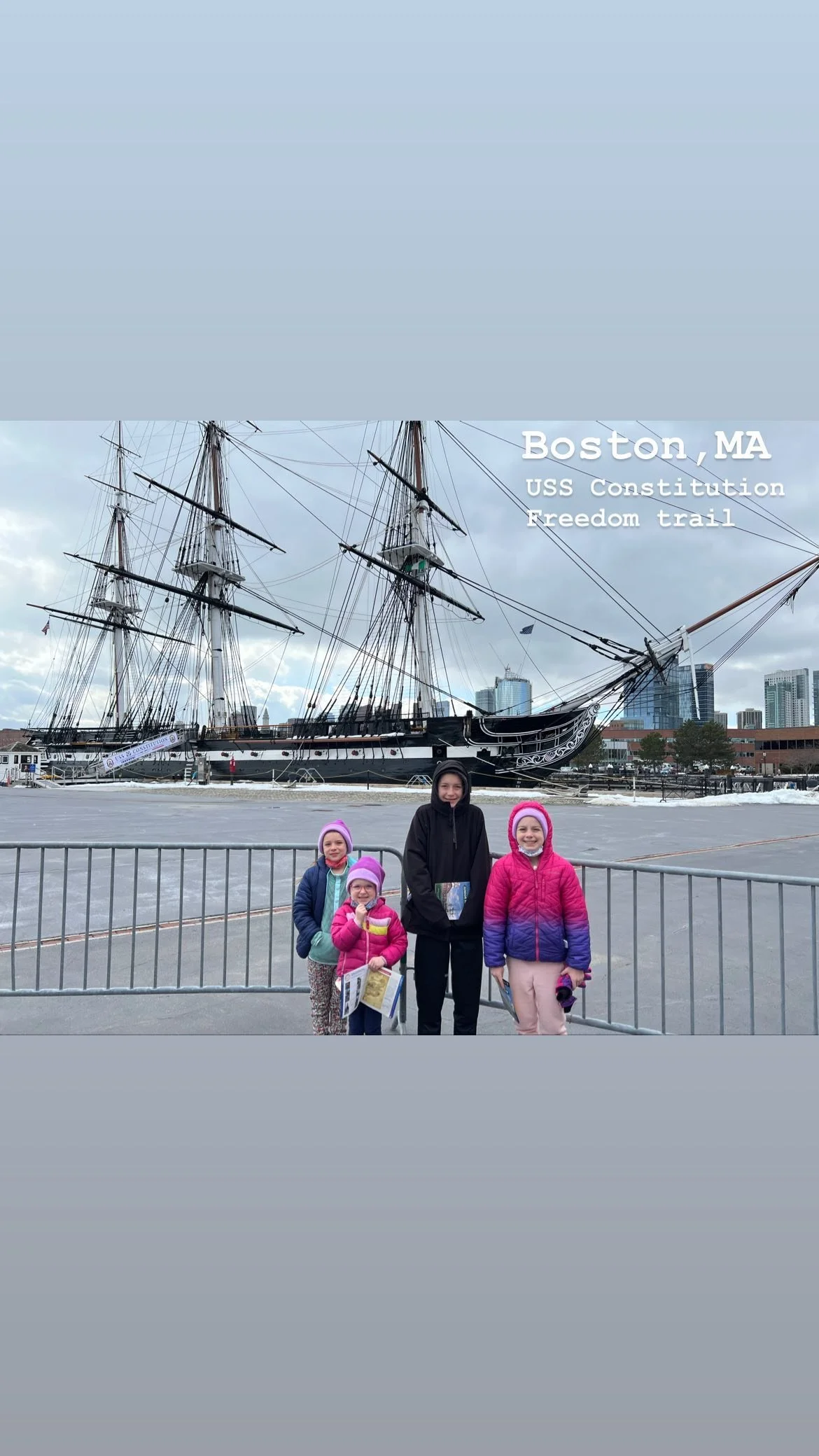
The Freedom Trail organized the history for us.
Boston Common, the State House, Old South Meeting House, Old State House, Faneuil Hall, Paul Revere House, and Old North Church became one connected story instead of separate map pins.
Walking the route kept the family in the city rather than moving between attractions by car. Quincy Market gave everyone a practical dinner choice at the end.
What worked
Parking the car for the Boston stay
Starting early
Using the marked route as the day's structure
What we would change
We would decide in advance which interiors matter most. Entering every site makes the day longer than the distance suggests.
Our take: The Freedom Trail is the clearest first-day answer for a family that came to Boston for history.
WATERFRONT DAY
The harbor gave the trip a different rhythm.
We used the Boston Tea Party Ships and Museum as the history anchor, then stayed along the Harborwalk, aquarium area, and waterfront parks.
Fresh seafood and a view of the water made the evening feel connected to the day instead of another drive across the city.
What worked
One ticketed waterfront attraction
Walking the Harborwalk
Dinner close to the water
What we would change
We would check aquarium and Tea Party ticket times before deciding the order. Both can absorb more time than a quick waterfront plan implies.
Our take: The harbor balanced the colonial-history day and made Boston feel like a coastal city, not only an outdoor museum.
HALF-DAY ACROSS THE CHARLES
Cambridge was an easy change of scene.
We crossed the river for Harvard and Harvard Square, then used the rest of the day for the museum or neighborhood that matched everyone's energy.
Boston's walkability made it easy to pair one planned stop with Beacon Hill, the Esplanade, or another area we had not finished.
What worked
A focused campus visit
Public transit instead of moving the car
A flexible afternoon
What we would change
We would verify official tour availability and avoid presenting the campus as a full university experience when the family really wants a short walk and the square.
Our take: Cambridge added another layer without requiring another hotel or a complicated day trip.
WHAT WORKED
We would keep these parts.
The Freedom Trail as a route: It organized the history without turning it into a race.
An interactive anchor: The Boston Tea Party Ships and Museum gave the family a memorable shared experience.
Flexible coastal drives: Mystic, Newport, and seafood stops could follow interest instead of a clock.
Parking the car: Boston became easier once we committed to walking and transit.
WHAT WE WOULD CHANGE
A better version of the same trip.
Do not schedule the road trip: The New York-Boston drive is better when interesting stops can win.
Split the longest walking: Harbor time and the full historic route do not need to share one tired day.
Check seasonal hours: Waterfront and historic-site schedules can change the shape of the day.